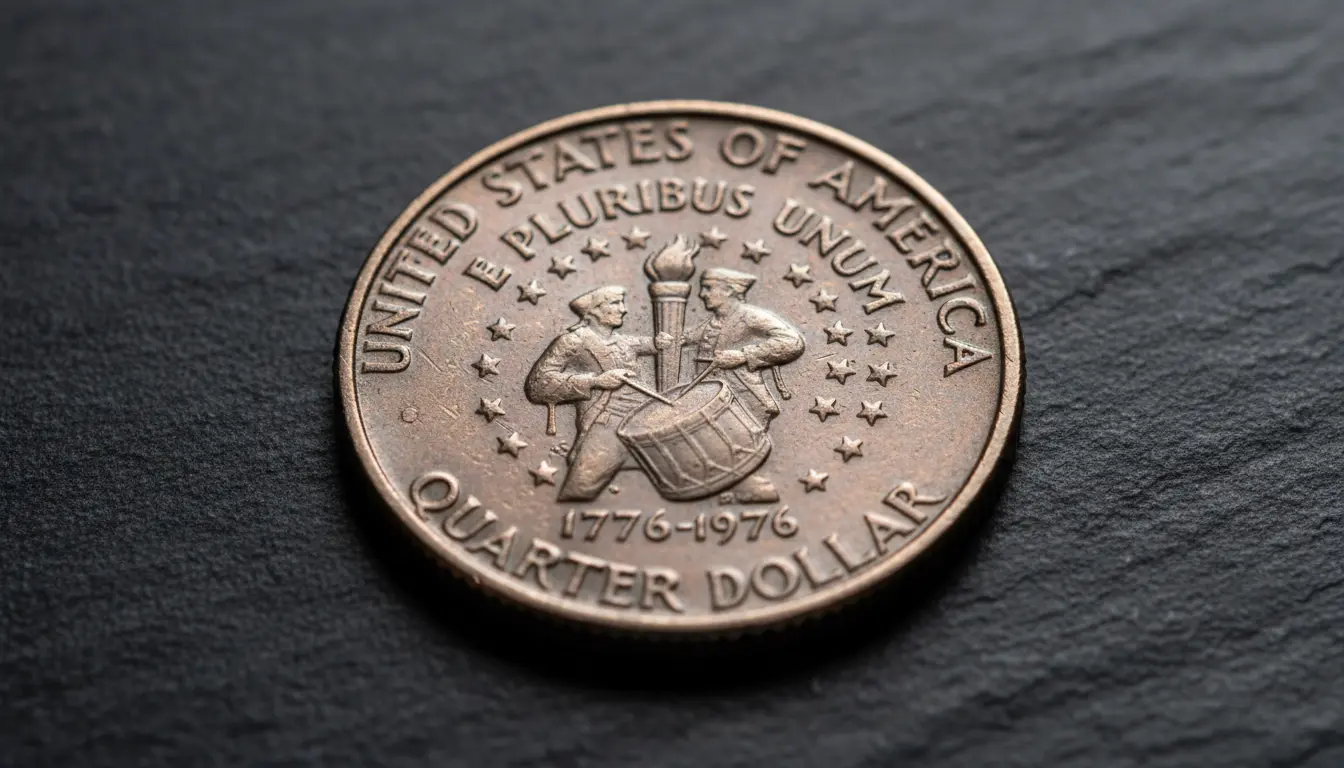
Understanding the Rare Bicentennial Quarter Worth $2.5 Billion claim
Stories about a single Bicentennial quarter being worth billions of dollars circulate online regularly. These claims are largely myths and often spread through social posts and sensational headlines.
That said, some Bicentennial quarters do have collectible value. The practical question is how to tell common coins from genuinely valuable varieties and what to do if you think you found one.
Why the idea of a Bicentennial quarter worth $2.5 billion is unlikely
The U.S. Mint produced Bicentennial quarters in very large numbers in 1975 and 1976. Hundreds of millions were struck for circulation, plus additional collector pieces.
High values generally come from rarity, unique errors, or exceptional condition. A coin worth billions would have to be uniquely scarce and verifiably authenticated, which no documented Bicentennial quarter meets.
What makes a coin truly rare
- Extremely low mintage or surviving population.
- Unique errors that are documented and chased by collectors.
- Proof or mint-state examples in grades that almost never survive.
- Strong, verifiable provenance and auction records.
How to inspect a Bicentennial quarter in your loose change
Follow a simple, step-by-step check. You do not need advanced tools to spot potential interest; basic observations will narrow down candidates for professional review.
Quick inspection checklist for a Bicentennial quarter
- Look at the date and reverse design. Bicentennial quarters show the double date 1776-1976 and the drummer design on the reverse.
- Note the mint mark. Collector pieces will often have an S for San Francisco or a D for Denver. Circulation strikes commonly have no mint mark or a D.
- Examine for obvious errors. Off-center strikes, clipped planchets, broadstrikes, and clear doubled dies are worth closer attention.
- Check the condition. Heavy wear lowers interest dramatically. Uncirculated or proof finishes increase collector value.
- Compare against reference photos from trusted sites like PCGS, NGC, or CoinWorld.
Tools that help
- A loupe or magnifier with 5x to 10x magnification.
- A precise scale and calipers if you have them, to check weight and diameter against official specs.
- Good lighting and a neutral background for photographing the coin if you need to show an expert.
Documenting and verifying a potential find
If your inspection suggests an unusual error or exceptionally high grade, document the coin carefully before sending it anywhere. Photos and notes help establish provenance.
Do not attempt to clean or repair the coin. Cleaning can destroy collector value and make professional grading impossible.
Next steps if you think you found something valuable
- Photograph the coin from multiple angles under good light.
- Compare with examples from recognized grading services and auction records.
- Seek a second opinion from a reputable coin dealer or local coin club.
- Consider submitting the coin to a third-party grading service like PCGS or NGC for certification if experts agree it is unusual.
Real-world example: A small, verifiable find
A coin collector found a Bicentennial quarter with a prominent die crack through the drummer design. After photographing the coin and getting feedback from a regional coin club, the collector sent it to a grading service for review.
The certified variety attracted interest from specialty collectors and sold at a modest price above face value. The case shows how documentation and professional grading can turn a curiosity into a saleable collectible.
Practical tips for everyday coin hunters
- Check change periodically. Even if most finds are worth only face value, you might uncover a collector piece.
- Keep suspicious coins safe and do not clean them. Store in a soft holder or flip.
- Learn basic reference names for common errors like doubled die, clipped planchet, and off-center strike.
- Join a local coin club or online forum to get quick feedback from experienced collectors.
Where to learn more and verify value
Trusted sources include third-party grading services, established coin dealers, and long-running numismatic publications. Auction records from major houses also provide real market comparables.
Be skeptical of viral claims that a single circulation coin is worth an astronomical amount without verifiable documentation and independent grading.
Bottom line on the Rare Bicentennial Quarter Worth $2.5 Billion
The headline figure of $2.5 billion is a myth. While some Bicentennial quarters have collectible value, the vast majority are common and worth face value or modest premiums.
If you think you found something unusual, take careful photos, seek knowledgeable opinions, and consider professional grading. Those steps give you the best chance to understand and realize any real value.