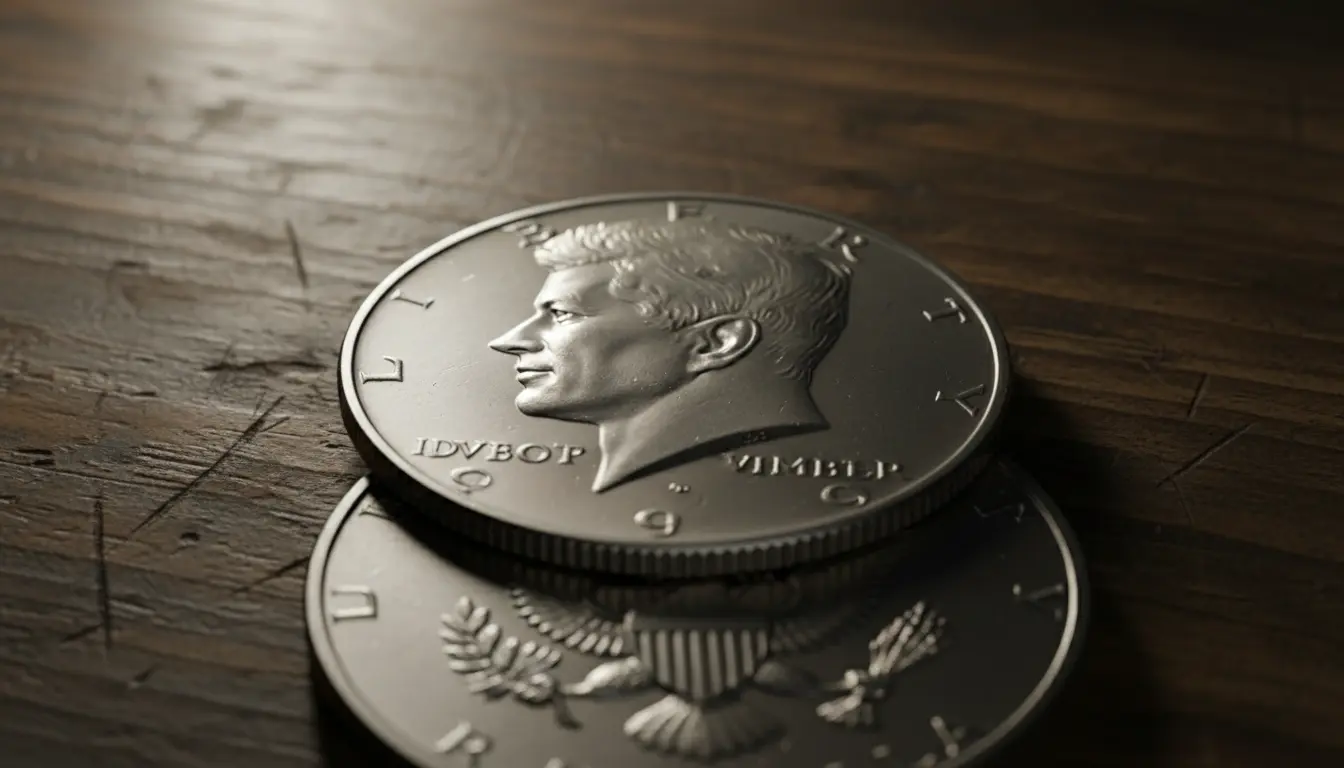
The 1968 half dollar value depends on metal content, condition, mint mark, and collector demand. This guide shows how to identify your Kennedy half, estimate melt and collector value, and spot coins worth more than 50 cents.
How to Identify Your 1968 Half Dollar
Start with simple visual checks. Look at the obverse for Kennedy’s profile and the date 1968. In 1968 mint marks appear on the obverse above the date.
Common mint marks are D (Denver) and S (San Francisco); no mint mark generally means Philadelphia. All 1968 business-strike Kennedy halves contain 40% silver.
1968 Half Dollar Value — Key Factors That Affect Price
Several factors determine whether a 1968 Kennedy is worth more than face value. You should check metal content, condition (grade), mint mark, and any errors or rare varieties.
- Silver content — 1968 halves are 40% silver, so melt value tracks the silver spot price.
- Condition — Higher grades (uncirculated or proof) add collectible premium.
- Mint mark — Some collectors prefer certain mints; S proofs can command small premiums.
- Errors and varieties — Doubled dies, misplaced mint marks, or striking errors can significantly increase value.
Calculate Melt Value for 1968 Half Dollar Value
To estimate melt value, multiply the silver content by the current silver spot price. A 1968 Kennedy half contains about 0.1479 troy ounces of silver.
Example calculation: If silver is $25 per troy ounce, melt value = 0.1479 × $25 = $3.70. This is the baseline value for a typical circulated silver 1968 half.
Condition and Grading: How They Influence 1968 Half Dollar Value
Grading ranges from Good (G) to Mint State (MS). A worn circulated 1968 half is usually worth close to melt value.
Uncirculated coins graded MS60–MS65 or better can carry collector premiums above melt, often depending on the exact grade.
Look for Proofs and Special Strikes
Proof coins from 1968 were produced for collectors and typically show sharper details and a different finish. These can be more valuable than business strikes, especially in top grades.
Errors, Varieties, and Rarity That Increase Value
Error coins and distinct varieties are the main ways a 1968 half can be worth substantially more than melt value. Collectors pay premiums for:
- Doubled dies (obverse or reverse)
- Off-center strikes or clipped planchets
- Misplaced or repunched mint marks
- Extremely rare die states or low-production proofs
If you suspect an error, get the coin examined by a reputable dealer or submit it for grading and attribution from a service such as PCGS or NGC.
Practical Steps to Check Your 1968 Half Dollar Value
- Inspect for date and mint mark (obverse above the date).
- Weigh the coin if you have a precise scale; 1968 halves weigh more than modern clad halves if they are 40% silver.
- Check condition under good light and a magnifier; note scratches, wear, or proof-like surfaces.
- Compare to recent sales on auction sites or coin price guides for similar grade and mint mark.
- When in doubt, get a professional appraisal or submit the coin to a third-party grading service.
Real-World Example: A Small Case Study
A collector found a 1968-D Kennedy half in a coin roll and took these steps: they verified the obverse mint mark, checked the coin under magnification, and compared recent auction results for similar grades.
Using a hypothetical silver price of $25/oz, they calculated melt at about $3.70. Because the coin showed minimal wear (about AU58), they expected a small premium and listed it for sale. It sold within a week for an amount above melt but well below high-grade auction prices.
This example shows how easy checks and a quick market search can move a coin from a pocket find to a sale above face value.
When to Seek Professional Help
Contact a reputable coin dealer or grading service if you find unusual features, errors, or an uncirculated specimen. Professional grading documents condition and can significantly increase a coin’s marketability.
Also consider dealer or auction sale if you own a high-grade MS coin or an authenticated error/variety.
Final Checklist: Is Your 1968 Kennedy Worth More Than 50?
- Does it show 1968 and a D or S mint mark? Then it is 40% silver.
- Is the coin uncirculated or proof? Expect collector premiums.
- Are there visible errors or unusual features? Have it examined.
- Check current silver price and recent sales to estimate value.
Most circulated 1968 halves are worth more than 50 cents due to their silver content. However, collector value above melt depends on grade, rarity, and proven errors. Use the steps above to estimate value or consult a professional for a precise appraisal.