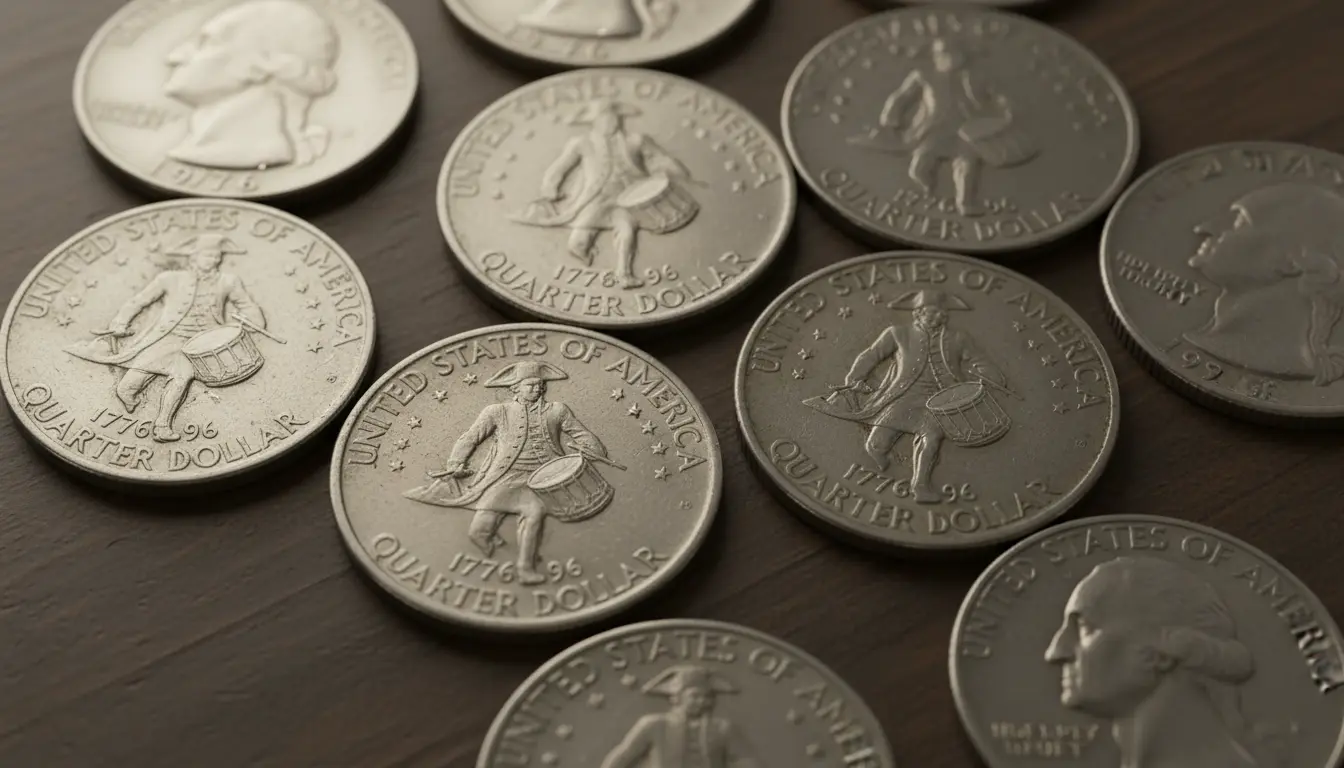
Finding valuable Bicentennial quarters in circulation
Many collectors still find unexpected value in common pocket change. The 1976 Bicentennial quarter appears in everyday rolls, but a handful of error and rare varieties can be worth hundreds to thousands of dollars.
This guide explains five hidden Bicentennial quarters to watch for, how to spot them, and what to do if you find one in circulation.
Why Bicentennial quarters appear often
The U.S. Mint issued large numbers of Bicentennial quarters in 1975–1976 to mark the 200th anniversary of the United States. Most are common and worth face value, but the production scale also produced error coins and stray proofs that can be valuable.
Knowing which varieties to look for increases your chances of turning ordinary change into collectible coins.
5 hidden Bicentennial quarters to look for
1. Doubled Die Obverse (DDO)
A doubled die obverse shows noticeable doubling on Liberty’s profile, the date, or the motto. Doubling often appears on the lettering and can be seen with a 5–10x loupe.
Why it matters: Strong doubling is scarce and sought by collectors. Values range from modest premiums to several hundred dollars, depending on severity and eye appeal.
2. Repunched Mint Mark (RPM) and Mint Mark Anomalies
Look at the mint mark under a magnifier. Repunched mint marks show overlapping or shadowed letters where the mint mark was struck more than once. Some 1976 varieties show faint re-punching or misplaced marks.
Why it matters: RPMs and odd mint marks are collectible. Minor examples may bring $20–$100; strong repunching can fetch higher prices from specialists.
3. Off-Center Strikes
An off-center quarter shows part of the design missing and blank planchet on one side. The value increases with the degree of misalignment and the presence of complete design elements.
Why it matters: Mild off-centers (10–20%) may get small premiums. Severe off-center strikes (40% or more) can sell for hundreds or thousands depending on condition and how pleasing the strike appears.
4. Broadstrikes and Struck-Through Errors
Broadstrikes occur when the collar fails and the coin spreads wider than normal. Struck-through errors show foreign material or grease lines across the design. Both are visible without heavy magnification.
Why it matters: Broadstrikes and struck-through errors are popular with error collectors and often sell for premiums ranging from $50 to several hundred dollars for dramatic examples.
5. Silver Proof Strays and Business Strikes in Circulation
The Mint released proof sets in 40% silver for 1976-S quarters and also struck large numbers of clad business strikes. Occasionally, silver proofs or proof-like strikes escape into circulation.
Why it matters: A genuine 40% silver proof quarter is worth its silver melt value plus collector premium. Even a proof-quality coin in circulation can command a noticeable premium when authenticated.
How to inspect Bicentennial quarters in circulation
Use simple tools and steps to check rolls, pocket change, and bank tills. A basic loupe (5–10x), a white sheet of paper, and good light are enough for initial sorting.
- Check the date side for doubling, mint mark anomalies, and off-center strikes.
- Use a magnifier to inspect lettering and the eagle or drummer design for doubling.
- Compare suspicious coins to known examples online or in reference guides.
- Weigh coins if you suspect silver—though tests are best left to professionals.
What to do if you find a potential rare Bicentennial quarter
Do not clean the coin—cleaning can destroy the collector value. Handle coins by the edges and keep them in protective flips or coin holders.
Next steps:
- Photograph the coin with a plain background and magnified shots of the anomaly.
- Ask for an opinion from local coin dealers or an experienced collector group online.
- For high-value or unclear examples, submit the coin to a reputable grading service (PCGS, NGC) for authentication.
The 1976 Bicentennial quarter uses a special dual date 1776–1976. Many error coins became collectible simply because demand for the anniversary designs was higher than usual.
Case study: Finding an off-center Bicentennial quarter
A collector shared a real-world example of discovery. While sorting change from a bank roll, they noticed a Bicentennial quarter missing part of its design. Magnification revealed a roughly 60% off-center strike.
After photographing the coin and consulting a dealer, they sold it to an error-coin buyer for over $2,000. The coin later drew interest at auction because of its strong visual appeal and documentation.
Realistic price ranges and expectations
Expect modest returns for minor varieties and significant premiums for dramatic or authenticated pieces. Typical examples:
- Doubled die obverse: $50–$500 depending on strength.
- Repunched mint mark: $20–$300 depending on clarity.
- Off-center strikes: $50 to several thousand for severe strikes.
- Broadstrikes/struck-through: $30–$600 for striking examples.
- Silver proof strays: Melt value plus premiums; authenticated pieces earn more.
Remember that grading, documentation, and market demand strongly affect final prices.
Safety and selling tips
Get multiple opinions before selling. Use reputable auction houses or certified dealers for high-value coins. Keep documentation of provenance and photos to support authentication.
When in doubt, submit the coin to a grading service for an objective evaluation. A slabbed and graded coin usually sells for higher and faster than raw pieces.
Summary
Bicentennial quarters are common, but five types of hidden varieties—doubled dies, RPMs, off-center strikes, broadstrikes, and stray silver proofs—can be worth far more than face value. With a loupe, patience, and a few checks, you can turn routine change into collectible finds.
Keep checking rolls and pocket change—rare coins still turn up in circulation, and proper identification can unlock substantial value.