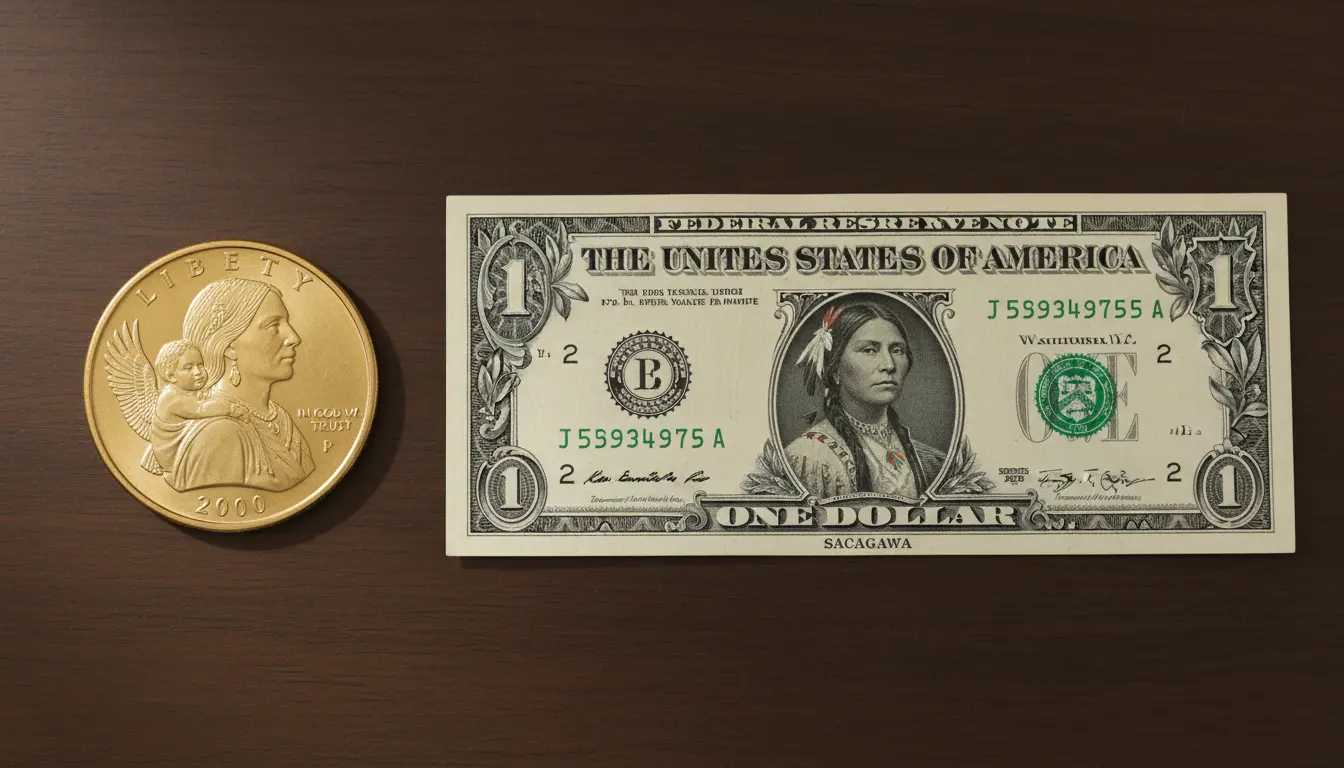
The debate between collecting Sacagawea Dollar coins and Star Note replacement banknotes is common among new and experienced numismatists. Both categories hide rarities, but they follow different market rules. This guide explains the fundamentals and how to decide which may appreciate by 2025.
Understanding the Sacagawea Dollar
The Sacagawea Dollar debuted in 2000 and is popular for its golden appearance and modern minting. Collectors look for low mintage issues, error coins, proof strikes, and high grades to drive value.
Key value drivers for Sacagawea Dollar
- Mint location and year, especially early issues like 2000 and 2001.
- Strike type: business strike versus proof or uncirculated rolls.
- Errors and varieties: doubled dies, laminations, or distinctive die breaks.
- Grade and population: high MS or PR grades with low population reports.
These factors create scarcity even among modern coins. Grading by a major service like PCGS or NGC often magnifies market interest and resale value.
Understanding Star Note banknotes
Star Notes are replacement banknotes printed to replace faulty sheets. They are identified by a small star at the end of the serial number. Collectors value them for scarcity, unusual serials, and condition.
Key value drivers for Star Note
- Series and denomination, for example recent low denomination notes versus older series.
- Condition: uncirculated and Gem Uncirculated examples are most collectible.
- Serial pattern combined with a star note is especially desirable, such as low or repeating numbers.
- Printing errors and plate varieties that survived into circulation.
Unlike coins, banknote grading and certification by PMG or PCGS Currency can greatly affect price. Market interest also responds to topical collecting trends and media attention.
Sacagawea Dollar vs Star Note: Market comparison
Both markets reward scarcity, condition, and documented provenance. But they differ in supply dynamics and collector behavior.
Supply and production differences
- Sacagawea Dollars are produced by the US Mint with documented mintages per year and mint mark.
- Star Notes are replacement notes and their exact counts are less visible to casual collectors, but they are produced in limited runs.
- Coin markets often move on grading pop reports; banknote markets react to serial appeal and certification tiers.
Liquidity and resale channels
- Coins trade actively on auction sites, coin forums, and dealer networks.
- Star Notes sell on currency marketplaces, eBay, and specialized auctions for banknotes.
- Coins often attract long-term numismatists; star notes attract both currency collectors and novelty buyers seeking special serials.
Which hidden treasure has better upside by 2025?
There is no guaranteed winner. Instead, the better investment depends on selection and timing. Use these practical criteria to choose:
- Rarity: Seek documented low-mintage Sacagawea dates or rare star note series.
- Condition: Prioritize high-grade coins and Gem uncirculated star notes.
- Documentation: Graded examples or provenance listings increase buyer confidence.
- Market demand: Watch auction results and price guides for recent sales trends.
Generally, a well-chosen high-grade Sacagawea error or a rare early Sacagawea proof can outperform ordinary star notes. Conversely, a star note with a low serial number or combined error may spike in value quickly if it gains collector attention.
Practical buying and grading tips
- Buy certified when possible to reduce grading risk and improve resale appeal.
- Compare completed sales, not just listings, to assess real market prices.
- Watch population reports for coins and census data for notes to judge rarity.
- Consider condition sensitivity: even small surface impairments can reduce value significantly.
Small real world example
Example case: A collector purchased an ungraded Sacagawea business strike in the mid 2000s for under fifty dollars. They submitted it for grading and received a high MS grade. Over the next decade the coin sold privately for several hundred dollars. The same collector also kept a matched star note with a repeating serial and later sold that note to a different buyer for a modest premium. The lesson is that identification, certification, and patience often produce returns in both markets.
Did You Know?
Sacagawea Dollars were intended to replace the Susan B Anthony dollar, but the distinctive golden color and smooth edge gave them a new collector following almost immediately.
Quick checklist before you buy
- Confirm year, mint, and any variety or error type for coins.
- For star notes check series, denomination, serial pattern, and condition.
- Get items graded when value justification exists for the grading cost.
- Document provenance and store items properly to preserve grade.
Final practical recommendation
If you prefer established grading systems and steady collector demand, focus on high-grade or error Sacagawea Dollars. If you like low initial cost with potential for sudden spikes based on serial appeal, add selective Star Notes to your collection. A balanced approach can capture upside from both markets while spreading risk.
Monitor auction results and cultivates contacts in both coin and currency communities. That information will be more valuable than any single prediction about which item will explode by 2025.