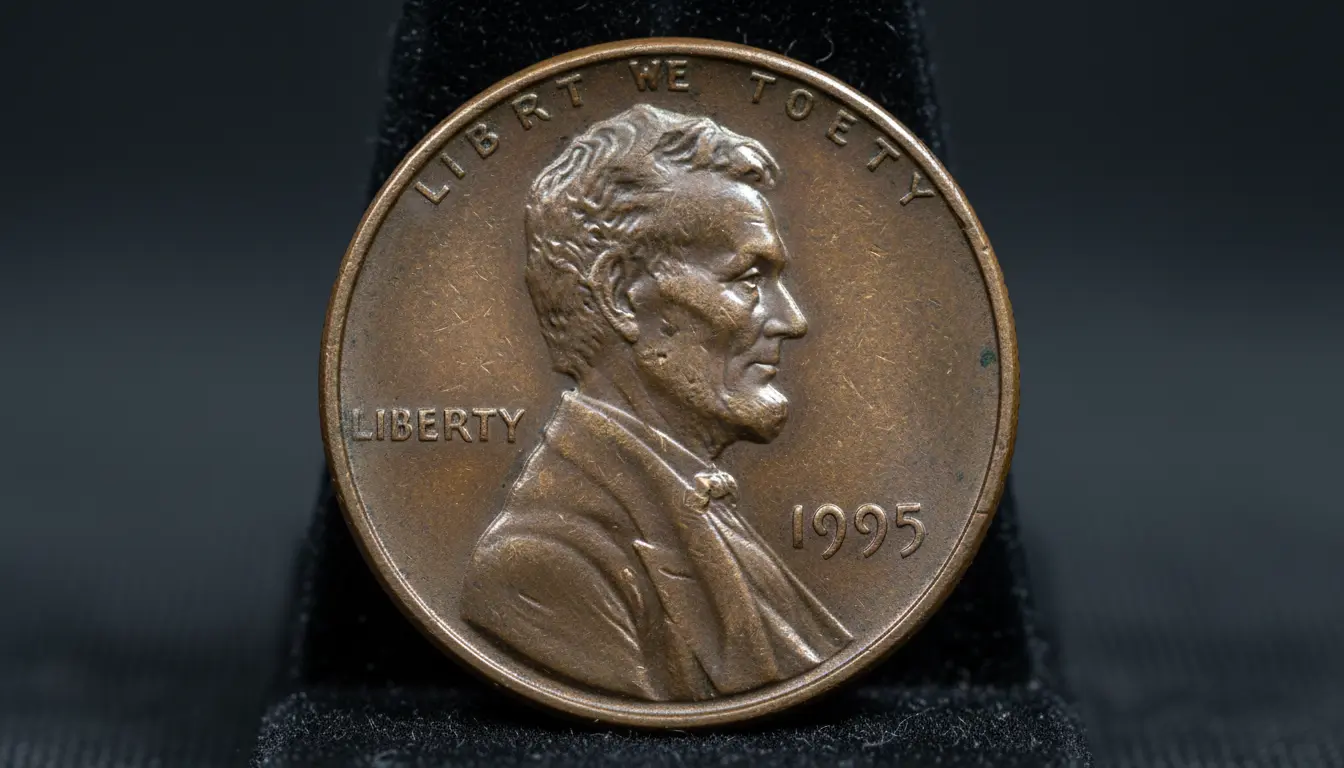
What Is a Doubled Die and Why It Matters for a 1995 Lincoln Cent
A doubled die error happens during the hubbing process at the mint when a die receives two slightly misaligned impressions. The result is a coin struck with design elements that appear doubled.
For collectors, doubled dies can be valuable because the doubling is part of the strike and appears on multiple coins struck from that die. The 1995 Lincoln cent is a modern coin where genuine doubled die examples can attract attention and a premium.
How to Spot a 1995 Lincoln Cent Doubled
Start by examining critical areas on the obverse. For Lincoln cents you should focus on the date, LIBERTY, and IN GOD WE TRUST. These are the spots where doubling is most obvious.
Look for full, raised secondary images rather than faint shadows. True doubled die impressions are separate and raised, not flat or shelf-like.
Step-by-step spotting checklist
- Clean hands and steady light: Work in bright, directional light to reveal shadows and raised edges.
- Use a magnifier: A 5x–10x loupe will help you see raised doubling on letters or numbers.
- Compare with a reference: Use a known normal 1995 cent to compare letter and date shapes and spacing.
- Take photos: Macro photos at different angles can reveal doubling that is hard to see with the naked eye.
Tools That Help Identify a Doubled Die
Simple tools make identification easier and more reliable. They help you distinguish true doubled dies from other issues.
- 5x–10x jeweler’s loupe for close inspection.
- Macro camera or smartphone lens with macro adapter to photograph the coin.
- Light box or single directional lamp to cast shadows and reveal raised doubling.
- Reference guides or online die variety databases for comparison images.
Machine Doubling vs True Doubled Die
Distinguishing machine doubling (also called mechanical doubling) from a doubled die is key. Collectors value doubled dies; machine doubling is a post-strike device contact and usually has little value.
Signs of machine doubling:
- Flat, shelf-like secondary images attached to the primary design.
- No full, raised second impression—looks like a strike-through or a flattened echo.
Signs of a true doubled die:
- Raised, fully formed second impression with depth and separated lines.
- Consistent doubling across multiple coins struck from the same die.
Authentication and Grading for a 1995 Lincoln Cent Doubled
If you believe you have a doubled die, the most reliable next step is authentication by a third-party grading service. Reputable services include PCGS, NGC, and ANACS.
Submit the coin for attribution, not just grading. Attribution will confirm whether the doubling is a recognized variety and whether it is a true doubled die.
What grading and authentication cost and return
- Basic authentication or attribution is often less expensive than full grading and is recommended for suspected variety coins.
- Grading to a high numeric grade can greatly increase market value, so consider the costs versus potential return.
- Keep documentation and photos before submission to track any changes and for insurance or sales listings.
How Value Is Determined for a Doubled 1995 Lincoln Cent
Value depends on the strength of the doubling, the rarity of the die, and the coin’s condition. Strong, clear doubled dies in high grade bring the highest prices.
Other factors that affect price include market demand, whether the variety is documented in reference guides, and whether it has been certified by a major service.
The term doubled die refers to the die itself being doubled at hubbing. A single die can produce many doubled die coins until the die is retired or corrected.
Practical Tips Before Selling or Buying
When buying, ask for close-up photos of the obverse showing the date and lettering. When selling, document the coin’s condition and any provenance or previous submissions to grading services.
Always disclose whether the doubling is machine doubling or a true doubled die and provide images to back your claim.
Real-World Example: Case Study
Local collector club member found a 1995 Lincoln cent in pocket change with obvious doubling on the date and LIBERTY. They photographed the coin and compared it to reference images from a die variety website.
After submitting images to an online forum, members suggested it might be a true doubled die, so the collector sent the coin for attribution. The grading service confirmed a doubled die attribution and labeled it a recognized variety.
The collector then offered the coin for sale in a coin marketplace and received interest based on the certification. The case highlights the steps: document, compare, authenticate, then sell.
Quick Summary: Spotting a Valuable 1995 Lincoln Cent Doubled
- Check date, LIBERTY, and IN GOD WE TRUST for raised doubling.
- Use a loupe, directional light, and macro photos for inspection.
- Differentiate machine doubling (flat) from true doubled die (raised).
- Get attribution from PCGS/NGC/ANACS before listing a coin as a doubled die.
Following these steps will help you spot and confirm a valuable doubled die on a 1995 Lincoln cent. Careful documentation and proper authentication are the most important actions for collectors and sellers.